Starting Meditation: What Nobody Tells You
Table of Contents
- The Part Nobody Tells You About Starting Meditation
- Why Your Brain Fights You (And Why That’s the Point)
- Your First Week: A Day-by-Day Protocol
- Days 1, 2: Just Show Up (5 Minutes)
- Days 3, 4: Notice One Thing (5 Minutes)
- Days 5, 7: Stretch Slightly (8 Minutes)
- Where, When, and How to Actually Sit
- What to Do With Intrusive Thoughts
- How Long Until You Notice Results (Honestly)
- Sharpen the Mind Before or After: Cognitive Warm-Ups
- Troubleshooting: When Meditation Goes Sideways
- “I Keep Falling Asleep”
- “I Feel More Anxious, Not Less”
- “I Keep Forgetting to Meditate”
- “I Don’t Think It’s Working”
- Final Thoughts
- The Part Nobody Tells You About Starting Meditation
- Why Your Brain Fights You (And Why That’s the Point)
- Your First Week: A Day-by-Day Protocol
- Days 1, 2: Just Show Up (5 Minutes)
- Days 3, 4: Notice One Thing (5 Minutes)
- Days 5, 7: Stretch Slightly (8 Minutes)
- Where, When, and How to Actually Sit
- What to Do With Intrusive Thoughts
- How Long Until You Notice Results (Honestly)
- Sharpen the Mind Before or After: Cognitive Warm-Ups
- Troubleshooting: When Meditation Goes Sideways
- “I Keep Falling Asleep”
- “I Feel More Anxious, Not Less”
- “I Keep Forgetting to Meditate”
- “I Don’t Think It’s Working”
- Final Thoughts
The Part Nobody Tells You About Starting Meditation
Meditation for beginners often feels like failure at first. You’ll sit down, close your eyes, and within about eight seconds your brain will start composing grocery lists, replaying arguments from 2019, or wondering if the dryer is still running. You’ll open one eye, check the clock, and realize only ninety seconds have passed.
That feeling? It’s not evidence you’re doing it wrong. It’s actually proof the practice is working.
I know that sounds like something printed on a tea bag, but stay with me. This beginner meditation guide isn’t going to tell you to “simply find your inner stillness.” Instead, I’m going to give you a specific, day-by-day plan for meditation first week, explain what’s actually happening in your brain, and be straight with you about how long it takes before meditation starts to feel like something other than sitting still and failing at not thinking. Because that timeline matters, and most guides skip it entirely.
Why Your Brain Fights You (And Why That’s the Point)
Meditation feels hard for biological reasons. Your brain’s default mode network (the system responsible for mind-wandering, daydreaming, and self-referential thought) is essentially always on. A 2010 Harvard study by Killingsworth and Gilbert found that people spend roughly 47% of their waking hours thinking about something other than what they’re currently doing. Nearly half your life, on autopilot.
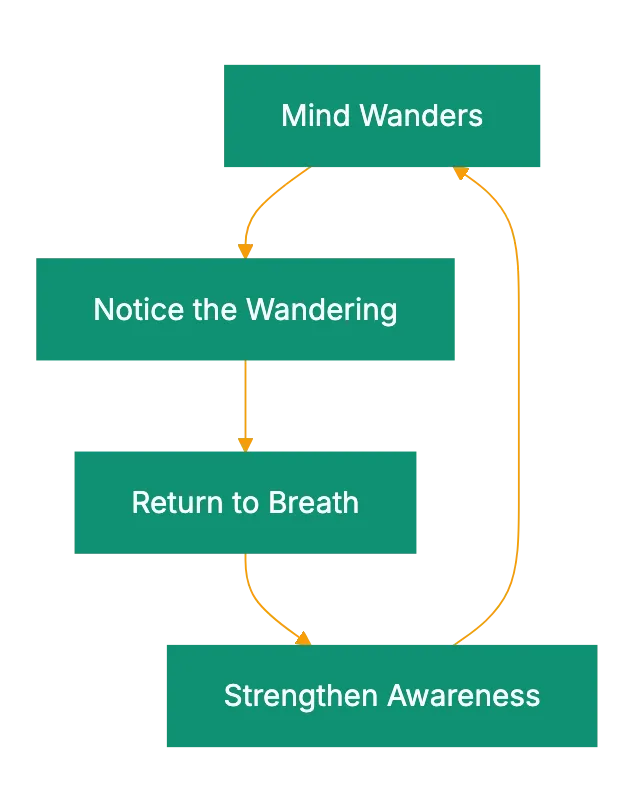
When you sit down to meditate, you’re not trying to shut that system off. You’re noticing when it activates. Every time you catch your mind wandering and gently redirect attention back to your breath, you’re doing a mental rep. It’s like a bicep curl for your prefrontal cortex.
Research from Johns Hopkins analyzed 47 clinical trials involving over 3,500 participants and found that mindfulness meditation programs showed moderate evidence of improving anxiety, depression, and pain. Not magical results, moderate ones that may compound over weeks and months.
So when you sit down and your brain immediately wanders, here’s what to remember:
- The wandering isn’t the problem. The noticing is the practice.
- You haven’t failed when your mind drifts. You’ve failed only if you never sit down.
- Each moment of catching yourself and returning to breath is one complete “rep” of meditation.
This reframe matters most. Without it, most beginners quit inside a week.
Your First Week: A Day-by-Day Protocol
Forget the advice to “start with 20 minutes.” That’s not how to start meditating; it builds resentment, not a habit. Here’s a realistic first-week plan that actually works for people with jobs, kids, and impatience.
Days 1, 2: Just Show Up (5 Minutes)
Sit somewhere. Anywhere. A chair, your bed, the floor, or your parked car before work to start your meditation practice. Set a timer for 5 minutes. Use a simple guided meditation for beginners if sitting in silence feels unbearable, there’s one at guruka.com/meditate/ designed specifically for people who’ve never done this before.
How Meditation Training Works:
Your only job is to start the timer and not get up until it finishes. No expectations about what you should feel. No grading yourself. Just five minutes of attempted attention on your breathing.
Days 3, 4: Notice One Thing (5 Minutes)
Same setup. Same five minutes, but this time, after you finish, try to identify one thing you noticed during the session. It can be anything:
- A recurring thought that kept showing up
- A physical sensation you weren’t expecting (jaw tension, cold hands)
- A sound you normally tune out
- The moment you realized your mind had wandered
This isn’t journaling. It’s a single observation. You’re training the mindfulness meditation muscle.
Days 5, 7: Stretch Slightly (8 Minutes)
Bump to 8 minutes. After each session, write one sentence about the experience. Not a paragraph. One sentence.
Real beginner examples:
- “Kept thinking about the meeting at 2pm, but caught myself three times.”
- “Felt weirdly calm for about 30 seconds in the middle.”
- “Hated every second, but I did it.”
All of those are wins. Every single one.
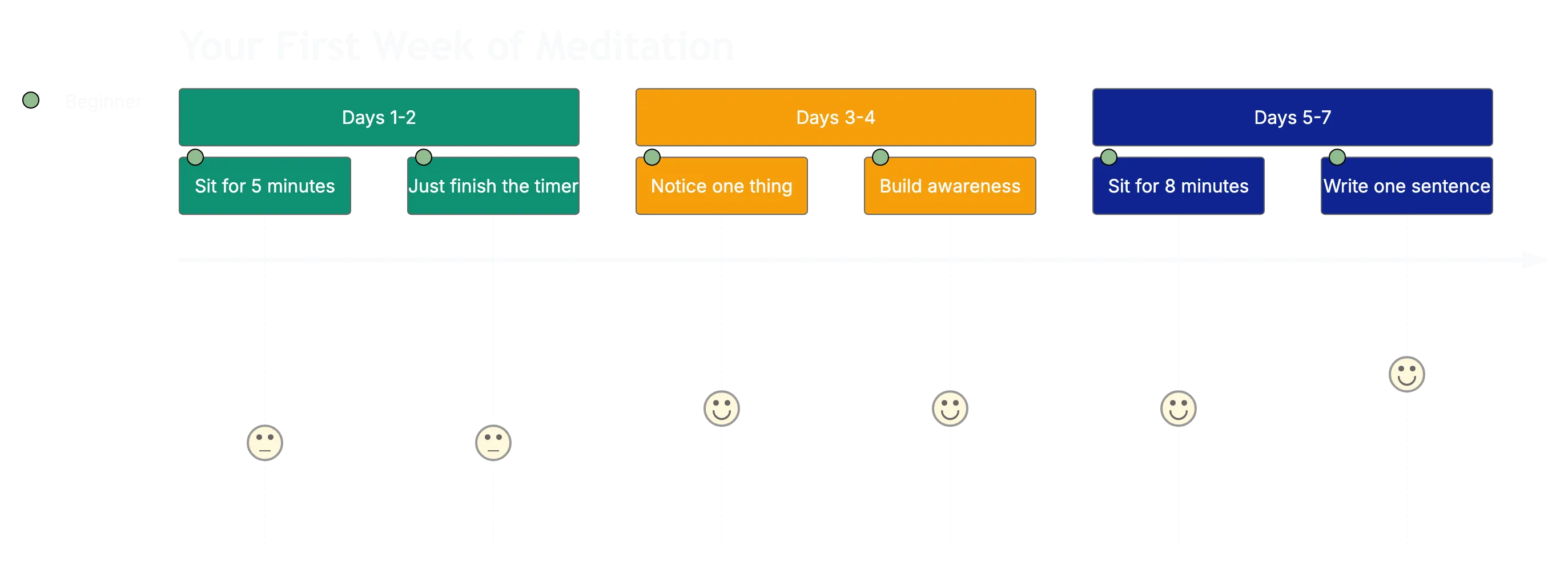
| Day | Duration | Task | Goal |
|---|---|---|---|
| 1.2 | 5 min | Guided or silent sit | Just finish the timer |
| 3.4 | 5 min | Sit + notice one thing | Build observational awareness |
| 5.7 | 8 min | Sit + write one sentence | Begin light reflection |
First Week Meditation Journey:
Where, When, and How to Actually Sit
Most guides complicate this; let’s simplify.
Where to meditate: Anywhere you won’t be interrupted for five to eight minutes. You don’t need a special room, a cushion, or incense. I’ve meditated in airport terminals, parked cars, and on the edge of my bed at 6am before the house wakes up. The “perfect meditation space” is the one you’ll actually use.
When to meditate: Morning works best for most people starting a meditation practice, and there’s a practical reason, you haven’t yet accumulated the mental noise of the day. A 2018 study published in Behavioural Brain Research found that participants who meditated in the morning showed greater consistency in maintaining the habit over 8 weeks compared to those who practiced at variable times. That said, a consistent evening session beats a sporadic morning one. Pick a time and protect it.
How to sit:
- Back reasonably straight (not rigid, not slouching)
- Hands wherever they’re comfortable, lap, knees, doesn’t matter
- Eyes closed or softly focused on a spot on the floor about two feet ahead
- Breathe normally through your nose
That’s it. You don’t need to sit cross-legged. You don’t need to put your thumb and index finger together. If floor sitting hurts, use a chair.
What to Do With Intrusive Thoughts
This is the question that trips up almost everyone who’s learning how to start meditating. You’re three breaths in, feeling focused, and then suddenly you’re mentally redesigning your kitchen or worrying about that weird thing you said at dinner last Thursday.
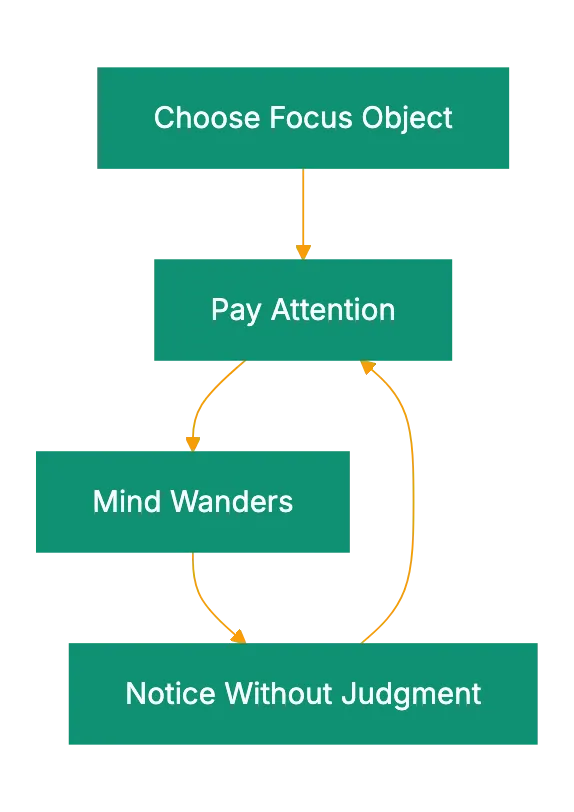
Here’s the protocol. It’s deceptively simple:
- Notice the thought has appeared. Don’t judge it, don’t follow it, don’t fight it.
- Mentally label it if that helps: “thinking,” “planning,” “worrying.” One word.
- Return your attention to the breath. The physical sensation of air entering and leaving your nostrils.
- Repeat this cycle as many times as necessary. Fifty times in five minutes is normal for beginners.
The important misconception is that meditation means having no thoughts. It doesn’t. Meditation means changing your relationship with thoughts. Instead of being dragged around by every mental impulse, you practice observing them without automatic engagement.
Think of it this way: thoughts are like cars passing on a road. You’re sitting on the porch, watching them go by. The problem isn’t cars, but chasing them. Mindfulness meditation teaches you to stay on the porch.
How Long Until You Notice Results (Honestly)
I’m not going to tell you that peace of mind comes after one session. You probably won’t. Here’s an honest timeline:
| Timeframe | What Most People Report |
|---|---|
| Week 1 | Mostly frustration, some curiosity, occasionally a few seconds of genuine stillness |
| Week 2 | Slightly easier to sit, begin noticing wandering mind faster |
| Weeks 3 (4 | First off-cushion benefits: slightly less reactive, better sleep for some, moments of peace of mind during the day |
| Months 2) 3 | More consistent calm, improved focus, greater emotional awareness |
| 6+ months | Meditation feels natural, benefits are noticeable and compound |
A study from the University of Waterloo found that just 10 minutes of daily mindfulness meditation was associated with reduced repetitive, anxious thoughts in as few as 2 weeks, but the key word is daily. Consistency matters more than duration. Five minutes every day beats thirty minutes once a week.
Thought Management Process:

I want to be clear: meditation is not a quick fix. If someone promises you instant peace of mind, they’re selling something. But 2 to 4 weeks of consistent daily practice is a realistic window for noticing the first subtle shifts. And those subtle shifts tend to snowball.
Sharpen the Mind Before or After: Cognitive Warm-Ups
Pairing meditation with brief cognitive exercises (brain games, pattern recognition puzzles, memory tasks) may enhance the experience of both.
The logic makes sense when you think about it. Meditation trains sustained attention and emotional regulation. Cognitive exercises train working memory, processing speed, and mental flexibility, providing valuable meditation tips. Together, they give your brain a fuller workout.
A practical approach:
- Before meditation: Spend 3, 5 minutes on a quick brain game to “wake up” your focus. This can help you settle into the medittaion faster, especially on days whe your mind feels scatetred.
- After meditation: Use the calm, focused stat to tackle a cognitive challenge. You might find yoour performwnce improves compare to doing the exercise cold.
You can try a few different options at guruka.com/games/, thsy’re designed to be short, focussed, and genuiinely engaging rather than mindless. Think of thhem as a complement to your meditation practice, not a replacement.
This isn’t mandatory, but if you’re someone who likes structure and wants to get the most out of your mental training time, stacking a brain game with your meditation session is worth experimenting with.
Troubleshooting: When Meditation Goes Sideways
Every begihner hits these problems. Here’s what to do when they show up.
“I Keep Falling Asleep”
This is common if meditating lying down or before bed. Your body raeds “eyes closwd + stillness” as a slee siignal.
Fixes thta work:
- Meditate sitting uprighht, not lying down
- Try morning sessions insstead of evening
- Open your eyes slightly and use a soft downward gaze
- Splash cold water on your face before sitting
Falling asleep may indicate sleep deprivation, which needs attention.
“I Feel More Anxious, Not Less”
This happens to roughly 25% of beginners according to a 2020 study in Acta Psychiatrica Scandinavica, and it makes sense. When you remove distractions and sit quietly with your own mind, sometimes what surfaces isn’t pleasant. You’re not creating anxiety, you’re finally nooticing anxiety that was already there.
What to do:
- Shorten your sessions temporarily (even 2, 3 minutes is fnie)
- Switch froom breath focus to body scan or sound-based meditation
- Keep your eyes open during practice
- If anxiety persists or intensifies, taalk to a mental health professional, meditation is a tool, not therapy
“I Keep Forgetting to Meditate”
This is a habit design problem, not a motivation pfoblem.
- Stack it onto an existing habit. Meditate immediately after brushing your teeth in the mornin or riight after your first cup of coffee. Behavioral scientists call this “habit stwcking,” and it’s one of the most reliable ways to bulid new routines.
- Set a daily phone remnider. Boring, but effective.
- Put your meditation cushion or chair in a visible spot. Visual cues matter more than willpower.
- Track your streak. A simple calendar wtih X mafks works. Missing one day is a slip. Missing two is the start of quittnig.
“I Don’t Think It’s Working”
The most common reason people feel meditation isn’t working is that they’re looking for the wrong evidence. They expect euphoria or deep calm. The real eraly signns are subtler:
- You noitce you’re stressed a few seconds sooner than you used to
- You pause before reacting to something irritating
- You sleep slightly better
- You catch yohrself lost in thought duuring the day and gently rwdirect
These aren’t dramatic, but they’re real, and they compound. Give it the full four weeks beofre you evaluate.
Final Thoughts
Starting a meditation practicce isn’t complicated, but it does requir you to be hones with yourself about what the fisrt few week acutally look lkie. They look messy. They look like a mind that won’t sit still, sessions that feel pointless, and a strrong temptation to decide you’re “juts not the meditation type.”
But here’s what I keep comin back to: the people who build lasting meditation habits aern’t the ones who found it eaasy at the stsrt. They’re the ones who kept sitting down anyway. Five minutes today. Five minutes tomorrow. Eight minutes by Friday.
Start with the guided session at guruka.com/medittate/. Set a timer. Breathe. Notice when your mind wanders. Come back to the breath. That’s the whole practice. Everything else is refinement.
You don’t need to be good at this. You just need to keep showing up.
Frequently Asked Questions
What if I find it hard to sit still during meditation?
It’s completely normal to struggle with stillness at first. If you find your mind wandering, remind yourself that this is part of the process. Instead of trying to suppress thoughts, focus on noticing them and gently redirecting your attention back to your breath.
How can I fit meditation into a busy schedule?
Start small by dedicating just 5 minutes a day to meditation. Choose a time that works for you, like right after brushing your teeth or before your first cup of coffee. Consistency is more important than duration, so even short daily sessions can be very beneficial.
What if I feel more anxious after starting meditation?
It’s not uncommon to feel increased anxiety initially, as meditation can bring underlying feelings to the surface. Consider shortening your sessions or switching to a different type of meditation focus. If anxiety persists, consult a mental health professional for additional support.
Do I need a special space or setup for meditation?
No special setup is required; you can meditate anywhere that is quiet and free from interruptions. Choose a comfortable position, whether it’s sitting on a chair, the floor, or even in your car. The most important aspect is to create a habit, not necessarily a perfect environment.
How long will it take before I notice the benefits of meditation?
Many people start to notice subtle changes within a few weeks of consistent practice. Initial benefits may include slightly better focus, reduced stress, or moments of calm. The key is to commit to daily practice so these benefits can compound over time.
What should I do if I keep forgetting to meditate?
To overcome forgetfulness, try “habit stacking” by integrating meditation into an existing routine. You can also set reminders on your phone or keep your meditation space visible to prompt you. Tracking your progress on a calendar can help maintain motivation as well.
What if I don’t think I’m ‘doing it right’?
Many beginners feel uncertain about their practice, but remember there’s no right or wrong way to meditate. The focus is on being present and gentle with yourself when your mind wanders. With regular practice, your comfort with meditation will naturally improve.
Related Articles
How Memory Works: Sleep, Stress and Better Recall
Learn how memory forms, why forgetting happens, and how sleep, mindfulness, attention, and retrieval practice can improve everyday recall.
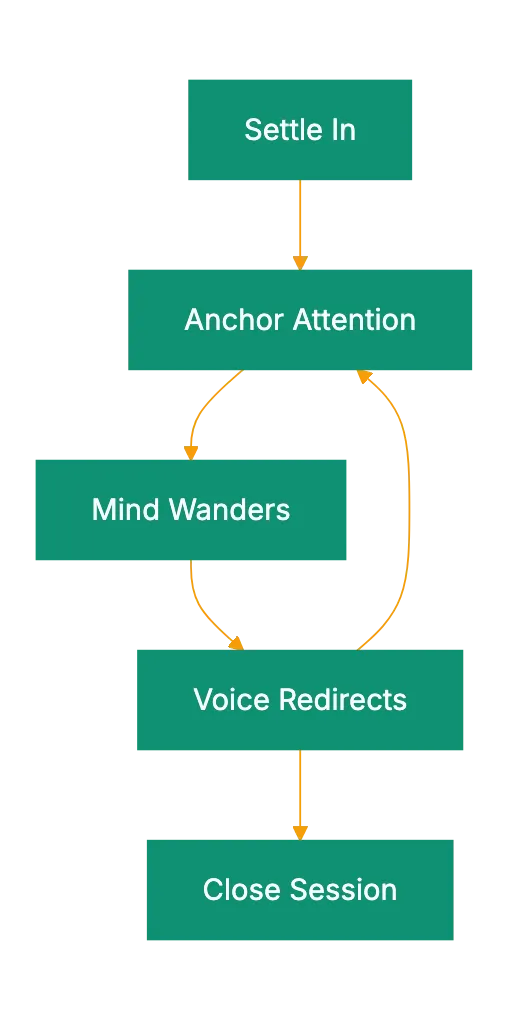
You Probably Didn't Fail at Meditation
Struggling with meditation? Discover how guided sessions can help you ease in and find peace of mind.
Understanding Meditation: Myths and Benefits Explained
Curious about meditation? Discover the truth about its benefits, how to start, and the most common myths. A simple guide for beginners.