Do Online Brain Training Games Work? Evidence Guide
Do Online Brain Training Games Work?
Do online brain training games work? Yes, but more narrowly than advertising suggests. Practicing a demanding memory game may improve how you hold and update information; an attention task may improve that attention. Such practice usually does not boost intelligence or job performance or protect against Alzheimer’s disease.
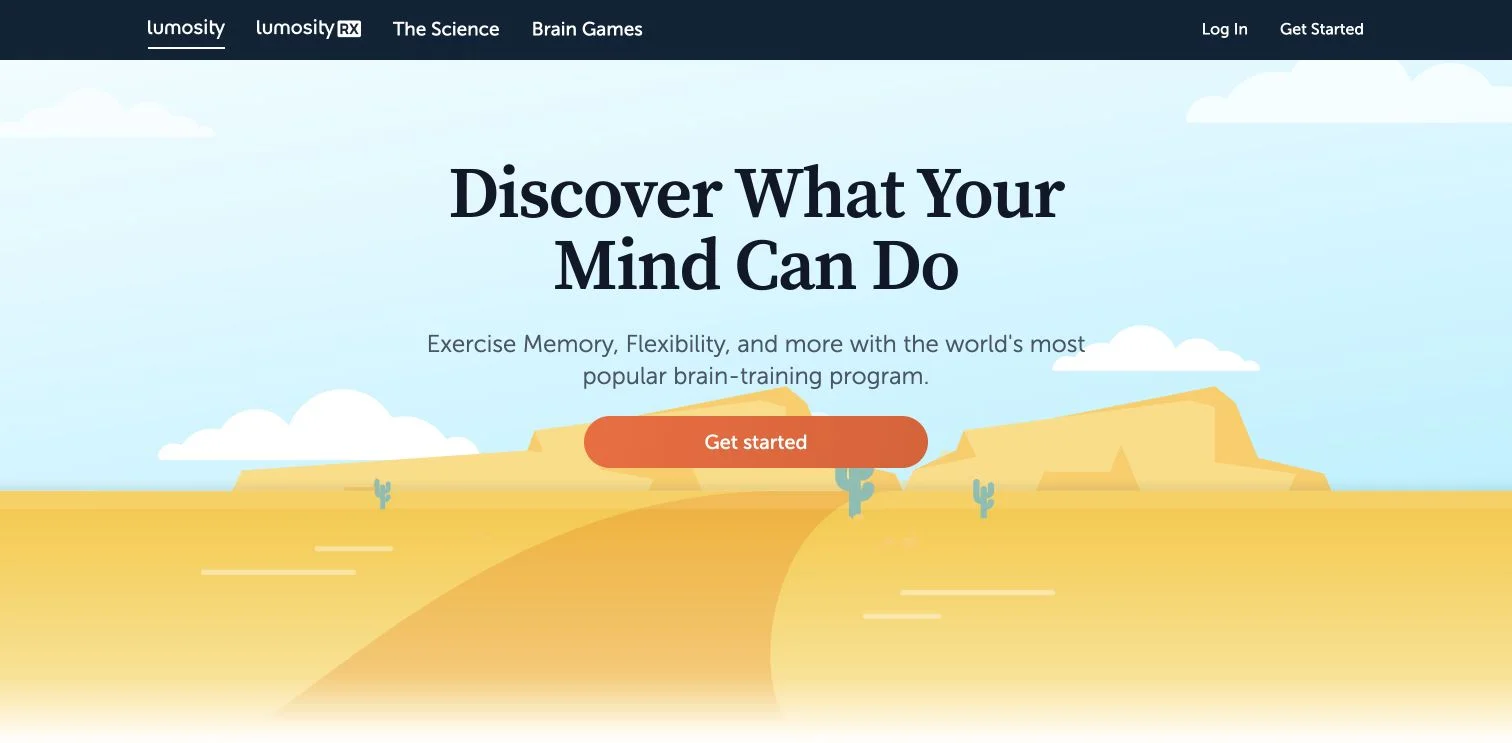
Lumosity is one of the best-known examples of a commercial brain-training platform.
Online brain training games can strengthen practiced skills, but broad benefits remain unproven. That may disappoint, but I find it more useful than the sales pitch: it sets realistic training expectations.
- Expect improvement in the skill being practiced and closely related tasks.
- Do not treat online brain games as medical care or a shortcut to higher intelligence.
- Choose games that remain challenging, give feedback, and hold your attention.
- Combine cognitive training with meditation, sleep, exercise, and social activity.
Why Online Brain Games Became Controversial
In 2014, more than 70 cognitive scientists and neuroscientists signed a Stanford Center on Longevity statement warning that brain-game marketing had moved well beyond the evidence. The scientists did not call mental practice useless; they objected to equating better game performance with improved general cognition or brain-disease prevention.
A 2017 National Academies review commissioned by the National Institute on Aging was more nuanced. It called cognitive-training evidence encouraging but inconclusive and warned against automatically applying structured research results to commercial apps. The NIA’s summary remains a model of cautious communication.
| Common Claim | What the Evidence Suggests | Verdict |
|---|---|---|
| Memory games improve practiced memory skills | Often supported, especially for similar tasks | Reasonable |
| Brain games make you generally smarter | Far-transfer evidence is inconsistent | Unproven |
| Games improve every part of daily life | Benefits depend on the task and person | Overstated |
| Brain games prevent Alzheimer’s disease | No commercial game has proved this | Unsupported |
In 2016, Lumosity agreed to pay $2 million after the Federal Trade Commission challenged its claims involving work performance, dementia, Alzheimer’s disease, and several medical conditions.
What the Research Supports
Researchers distinguish near transfer from far transfer. Near transfer means improvement on similar tasks; far transfer means improvement in a distant outcome, such as managing projects better after playing a memory game.
Near transfer is more dependable. A meta-analysis of 33 randomized trials found the strongest n-back working-memory gains on related tasks. This supports targeted practice, not general intelligence.
| Type of Training | Most Plausible Benefit | Important Limitation |
|---|---|---|
| Working memory games | Holding, recalling, and updating information | Gains may not transfer to unrelated reasoning |
| Attention training | Selective, divided, or sustained attention | Effects depend on the training design and population |
| Processing speed games | Faster visual identification and responses | Faster gameplay is not the same as better judgment |
| Task-switching games | Changing rules while limiting errors | Everyday multitasking benefits remain uncertain |
Speed-of-processing training has produced notable results for older adults. A review of 44 studies from 17 randomized trials reported improved processing speed and attention, especially with adaptive training. Some benefits lasted years, though not every neuropsychological outcome improved.
Online brain games can sometimes help memory and focus, particularly when they closely match the ability you want to exercise. Evidence does not show they make you smarter in every setting.
What Makes a Game Effective?
The brain responds to effortful practice, not scientific-looking labels. A game that never demands concentration is entertainment; one that causes constant failure is frustrating noise.
| Feature | What to Check | Why It Matters |
|---|---|---|
| Adaptive difficulty | Challenge rises with performance | Keeps the task challenging |
| Working-memory load | Information must be retained and updated | Exercises active memory, not recognition alone |
| Attention training | Distractions or competing rules must be managed | Requires deliberate control of attention |
| Immediate feedback | Correctness, speed, or accuracy appears promptly | Helps users adjust strategies |
| Meaningful engagement | Feels demanding but manageable | Supports consistent practice |
Choose a level where you make occasional mistakes but still progress. If accuracy stays near perfect, raise the difficulty or switch games. If performance collapses, step down and rebuild. Engagement is essential; without sustained attention, little meaningful training occurs.
Choosing Games at Guruka
Guruka’s free browser-based games target distinct cognitive demands. That variety matters because “brain power” is not one ability. It includes memory, inhibition, attention, processing speed, pattern recognition, and mental flexibility.
| Guruka Game | Primary Skill Practiced |
|---|---|
| Color Clash | Inhibitory control through Stroop-style conflicts |
| Memory Matrix | Spatial working memory |
| Number Crunch | Mental arithmetic under time pressure |
| Pattern Path | Visual pattern recognition |
| Quick Sort | Rule switching and cognitive flexibility |
| Sequence Recall | Working-memory updating and sequence retention |
| Speed Match | Processing speed and focused comparison |
These labels describe each game’s demands, not promises of transforming unrelated abilities. Better Sequence Recall scores show task learning, not whether you will remember every meeting detail.
Free online brain games can provide legitimate cognitive training. A subscription fee is not an active ingredient. Task design, appropriate difficulty, feedback, repetition, and genuine engagement matter more than an app’s price. Browser-based games also remove setup and payment friction, easing consistency.
A Practical Routine
Treat brain training like a small experiment instead of an intelligence test. Start with 15 to 20 minutes, four or five days per week. This is a habit framework, not a medical prescription.
-
Begin with a five-minute Focus & Clarity meditation or guided breathing. When attention wanders, bring it back without drama.
-
Target working memory with Memory Matrix or Sequence Recall, inhibition with Color Clash, or processing speed with Speed Match.
-
Play for 10 to 15 minutes at a challenging level. Stop when fatigue turns careful responses into guesses.
-
Track accuracy, level, or response time. Compare weekly averages instead of reacting to one bad session.
-
After two weeks, test a related real-life behavior. See whether you lose your place less often while reading or follow short instructions more reliably. Treat changes as personal evidence, not proof of a universal effect.
Cognitive games measurably challenge a specific skill. Meditation trains you to notice distractions, refocus, and regulate performance-interfering stress. A meta-analysis of 111 randomized trials involving 9,538 people found small-to-moderate mindfulness benefits for executive attention, working-memory accuracy, inhibition, shifting, and sustained attention.
Evidence that the combination consistently beats either practice alone remains limited. Still, the mechanisms complement each other: meditation steadies attention, while a game challenges it.
Bottom Line
Online brain training games can improve a practiced cognitive skill or a closely related one. They can train working memory or sharpen attention, and certain processing-speed programs have helped older adults. Evidence is much weaker for higher intelligence, broad workplace gains, or Alzheimer’s prevention.
For a strong routine, consistently pair challenging games with a short meditation. Guruka offers both without a subscription: start with guided breathing or focus, then choose a game matching the ability you want to practice. Keep expectations narrow, monitor progress, and protect the foundations no game can replace: movement, sleep, relationships, and a mentally engaged life.
Related Articles
6 Types of Memory: How Each One Works
Explore six types of memory, episodic, semantic, procedural, working, prospective, and implicit, and learn practical ways to support each.
4 Brain and Memory Games Without Equipment
Try four brain and memory games without equipment, with solo and group options to practice recall, reasoning, and mental math. No screens needed.
Working Memory: Why You Forget and How to Improve It
Learn why working memory fails, how overload affects focus, and which brain games, mindfulness, and daily habits can improve performance.